health fitness: Benefits Of Exercise For Children | Lose Weight,notyou'r time
Showing posts with label Benefits Of Exercise For Children. Show all posts

6 Brain Exercises For Children

They develop patterns of thought and behaviour, as children are more and more. With the help of these 6 brain exercises for children is a way to help develop these skills for optimal performance and mental skills for life.

Word search/crossword

They make a lot of children's books that contain the search terms and the crossword. Here is the interesting activities for children to exercise their brains using the development and think that they require. Crosswords are also a great family activity, where one can read off the track and say how many cards is involved, and everyone can guess.

Memory exercises

Working with memory exercises can be one of the easiest for children of the brain of the exercises, because it can be done in the car while driving or almost anywhere else. Since when you are young naturally we do these exercises, teach them to write their names, and what are their phone numbers and addresses. We can expand on it learn how to memorize names, songs and poems of genealogies.

Memorization helps children to use your brain to concentrate and retain information. It is also a useful skill since much of education is based on memorization, such as learning math facts numbers or learn a list of spelling words.
Benefits Of Exercise For Children, brain exercises, 6 Brain Exercises For Children

For brain obstacle course

We have all heard of obstacle courses that require physical exercises, but we can also establish that they include exercises of the brain for children. Obstacle to the brain may combine both physical and brain exercises, or to focus exclusively on the latter. You can do stations on the obstacle course physicist from where you can continue only to the next station after completing a mental task, including a term or a short crossword problem. You can also set is to have positions in any home where they must complete a number of tasks mental all aligned along a table or the floor.

Writing or drawing of left hand (or right)

A great way to exercise the brain uses the non-dominant hand to write or draw. This can be fun to see who can say what has been written or drawn subsequently. Another option is to make a drawing where half is made with the dominant hand and then is then copied to the other half of the non-dominant hand. Here the brain exercises for children that encourage both sides of your brain to work together.

While the brain for children exercises can be fun and easy payments can be enormous. Through the use of these brain exercises, children learn to exercise an important part of the body.
Self-Defeat Attitude: 4 Ways to Help Your Child


Self-Defeat Attitude: 4 Ways to Help Your Child

Adults are not the only ones who can have an attitude which is in line with self-defeat. This kind of behavior may even start during their younger years. More and more people are being noticed with this kind of behavior. If you are a parent and you have observed signs of this kind of behavior on your child then it is about time for you to take actions before it gets worse.

1st Step: Learn to Listen

When you are dealing with your kids and you want to help them become a better person by gradually eliminating those unfavorable traits such as self-defeat, you must learn how to listen. Listening is an integral part of any relationship especially on a parent-child level. You will not be able to help anybody, not even your kids if you do not know how to do this properly.

Whenever your child is sharing something, may it be about their frustrations at school, patiently hear them out and avoid making reactions especially if they share an event which they are not supposed to be involved in.  By listening to them, they will be more comfortable talking to you.

2nd Step: Let them Know That You Care

After listening to what your child has to say, it is now to let them know that you care about them. This should be established even before you give out any advice. If you have shared your piece and your child does not feel that you care for them, they will just reject your help never share their feelings with you ever again.

3rd Step: Believe In Your Child

After building trust and showing that you genuinely care for your child, you would then have to demonstrate that you believe in them. You need to show that you know they can change and they can turn their life around and become somebody which they have always wanted to be. This will help them realize that they can do it and they would need all the support that they can get especially from their parents.

4th Step: Make Them Feel Safe with You

This goes beyond the actual and physically holding your child. This signifies that you have to make your child realize that they are safe with you and that you will hold whatever conversation that you both had in confidence. They must realize that you will always be there to help them get through all of it.

As a parent, you will be playing an important role in the development of your kids as a person. You need to be there whenever they need you. If you think that you and your child would need further help, you can always seek the assistance of an expert.

the physical activety for the children


an american modern study that the practice of big children with little movement exercises regularly improves their ability to think and plan 
The study proved that physical exercise are associated with increased activity inside parts of the brain that related to the complex process of thinking and self-control.
The researcher Catherine Davis, Mental Health Specialist at the Georgia Institute of Immunology;said: "This confirms that the intense stillness that characterizes of most obese children affects their abilities and achievements."
ANDShe added that scientists have been convinced of the importance of physical exercise for children, but they do not have good evidence confirms that the practice of sport for children in school increases academic achievement. Although this study focused on overweight children, however, Davis believes that the findings also apply to normal-weight children.
AND Dr. Davies Believes  that: these positive changes in the mental capacity of children is the result of the interaction of biological and environmental factors.
and she adds that: the laboratory have proven that tests and the presence of growth factor nervous in rat experiments practiced physical activity overload, which may include some brain cells and further communication between them, but there are also some social and environmental factors that affect faster with the movement of the person."
 and Davis sees the importance of physical exercise to become an essential part of everyday life for our children, especially with the increasing rates of obesity among children in the world in general, and America in particular, where obese children represents nearly one-third.
and she said that "Parents should make sure their children awarded a balanced life, not only in their studies but also in learning how to care for their bodies as well."
The exercise program focused on fun and safety of more competition and skills, and also included games Alholahub running and rope skipping, researchers have recorded an increase in the pulse rates of children by 79%, which refers to the activity plus.
A research team of this study by choosing a sample of children 171 children randomly who are overweight between the ages of 7 and 11 years old. They then Division into two groups: the first underwent intensive exercises for periods ranging between 20 and 40 minutes after the school day and the second group did not practice any physical activity is a plus.
and the rays proved that:children who practiced sports increased their activity in the brain region known as area executive functions (which are connected to control self-planning and conclusion and abstract thinking), as well as the bark of the frontal lobe of the brain, which is linked to thinking processes and complex social behavior right, indicating that the more children increased their physical activity results of IQ tests have, but recorded an improvement in children's mathematical skills, but not in their ability to read.
and Thamantha Heller attached that, an expert psychology and nutrition to the study, saying: "Take a group of children and put them in the open air and give them some balls and rope jumping and chalk drawing on the he ground and leave them, you find them conducting and jumping and playing in a short time, and you will feel afterwards how much they are happy and more energy and intelligence. Know all over the importance of exercise for the health of the mind and body functions and when we deny a child his nature and natural need to play and let him spend long hours in front of the TV and the computer becomes the people Lethargic and  bad mood, and these children are more likely to be overweight and poor academic performance. "
and She adds: "in order to enjoy the children ofhealth and intelligence we have to encourage them to exercise on a regular basis and provide them with the appropriate time and place, we have to shut the television, computer and mobile phone and make them spend their time in the exercise of activities of natural play and run."

The benefits of exercise

Sports play an integral role in the physical any diet can be followed, I do not need to spend hours a day in the gym, all you need is to add a little movement to the daily routine.Recent studies have shown that physical exercise greatly benefit the body and lead to:
1. Reduce the incidence of diabetes 
2. By better control of blood sugar 
3. Reduce the incidence of cardiovascular disease and cholesterol
4. Maintaining weight 
5. Reduce the incidence of colds 
6. Better Memory 
7. Sleep better 
8. Maintaining the joints and stay away from diseases 
9. Increase self-confidence 
10. Better control of pressures and tension
This is a list of some activities that may keeps the regular Sports 

If you can not attend a particular sport, you can do the following:

The benefits of exercise

1. I walk and walk and walk! Learn and fun walk, at any time, any place!

2. Do not use the elevator, but the stairs, never to get off him first, and then climb, challenged yourself and wait for how to develop your ability to carry up and down the elevator without getting tired!
3. When you go to any place, stopped the car for a certain distance and walk to where you want, do not stand in front of a supermarket or shop, and walk away a little bit!
4. You do not sit and talk to the phone, move a little, walk, stand fast!
5. When mining food, Look for weekly time for movement and walking around the kitchen, and do not dress a little light exercise!
6. Do a little home work, clean the floor and move, arranged your room, move and then move then move!
7. Wash your clothes yourself! 
8. Take care Bmzratk and trees in your home, they are a fun sport! 
9. Wash your car yourself! 
10. Your play and fun with your children! 

If you can move without practicing a particular sport only think you'll find a lot of movement await

health benefits of exercise

6 health benefits of exercise and physical activities

 Many believed that exercise and physical activity is useful oregular basis is important for all, where go a long way in ensuring public health of the body in the long run, however, most people nly for people who suffer from an increase in weight, but the fact of the matter is that the practice of physical activities on a in this day and age prefer spend most of the time in a sitting or lying down on the couch at home, which may adversely affect the body, unlike exercise, which publish a mag 6 benefits resulting from the exercise are as follows .

 1 - physical exercise not only helps you lose weight but helps the body to maintain the desired weight, based on the intensity of activity by the person could lose some weight or can gain weight if the person is willing to do so

 2 - help in the fight against health problems, especially if you exercise regularly, where physical exercise helps to strengthen the immune system and increase the immunity which ensures to stay away from a number of diseases, especially heart disease, high blood pressure, diabetes and arthritis 
3 - help to get a better nighsleep, where you will enjoy a sound and deep sleep if you exercise regularly physical activity every day will make you feel as lively throughout the day. t's 

4 - helps to strengthen bones and muscles, where it proved studies and research activities and exercises work to strengthen the muscles and bones also slows the process of losing bone density, especially with age, so if you practice the exercises, the impact it will appear on the bones of the body, especially in the latter half of your life and with progress Age. 

5 - help in healing more quickly, especially after the surgeries where doctors advised after making several types of surgical patient moderate physical exercise on this advice may differ according to the state and the nature of the disease to ensure a speedy recovery. 

6 - help physical activity in maintaining the health of the mind is good, one of the most important benefits of exercise and physical activities Walking for 30 minutes may extend effect for the whole body, and the reason for this is that physical activity works to lift the mood where stimulates chemicals in the brain, leaving you a feeling of happiness and relaxation which enhances your confidence.

benefits of physical activity-exercise for kids-exercises for kids- activities for children-kids exercise-exercise facts-physical activities for kids -benefits of exercising-benefits of exercising-health benefits of exercise-the benefits of exercise


Benefits of Exercise Children

Benefits Of Exercise For Children

When most adults think about exercise, they imagine working out in the gym on a treadmill or lifting weights.
But for Children, exercise means playing and being physically active. Children exercise when they have gym class at school, during recess, at dance class or soccer practice, while riding bikes, or when playing tag.

The Many Benefits of Exercise For Children

Everyone can benefit from regular exercise. Children who are active will:
  • have stronger muscles and bones
  • have a leaner body because exercise helps control body fat
  • be less likely to become overweight
  • decrease the risk of developing type 2 diabetes
  • possibly lower blood pressure and blood cholesterol levels
  • have a better outlook on life
Besides enjoying the health benefits of regular exerciseChildren who are physically fit sleep better and are better able to handle physical and emotional challenges — from running to catch a bus to studying for a test.
Benefits of Exercise Children

The Three Elements of Fitness

If you've ever watched Children on a playground, you've seen the three elements of fitness in action when they:
  1. run away from theChildren who's "it" (endurance)
  2. cross the monkey bars (strength)
  3. bend down to tie their shoes (flexibility)
Parents should encourage their Children to do a variety of activities so that they can work on all three elements.
Endurance is developed when Children regularly engage in aerobic activity. During aerobic exercise, the heart beats faster and a person breathes harder. When done regularly and for extended periods of time, aerobic activity strengthens the heart and improves the body's ability to deliver oxygen to all its cells.
Aerobic exercise can be fun for both adults and Children. Examples of aerobic activities include:
  • basketball
  • bicycling
  • ice-skating
  • inline skating
  • soccer
  • swimming
  • tennis
  • walking
  • jogging
  • running
Improving strength doesn't have to mean lifting weights. Although some Children benefit from weightlifting, it should be done under the supervision of an experienced adult who works with them.
But most Children don't need a formal weight-training program to be strong. Push-ups, stomach crunches, pull-ups, and other exercises help tone and strengthen muscles. Children also incorporate strength activities in their play when they climb, do a handstand, or wrestle.
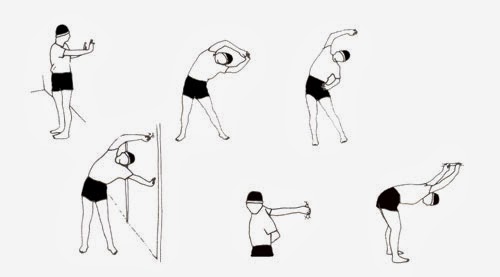
Stretching exercises help improve flexibility, allowing muscles and joints to bend and move easily through their full range of motion. Children look for opportunities every day to stretch when they try to get a toy just out of reach, practice a split, or do a cartwheel.

Benefits of Exercise for Kids

If you have ever wondered about the benefits of exercise for your child with CMT, keep reading. I spoke with Dr. Robert Chetlin, Associate Professor, Department of Human Performance and Department of Neurology at the West Virginia University School of Medicine and he has the following advice:
“Children with CMT should be active for a variety of reasons. If we can intervene when a patient with CMT is at the highest level of strength and function, that patient will achieve the highest quality of life as an adult. Also, we know when children are inactive they will go into adulthood with a much greater chance of developing coronary heart disease, obesity, high blood pressure and high cholesterol. Exercise affects a person’s overall health.”
We know that CMT damages the sensory and motor nerves that run from the arms and legs to the spinal cord and brain, ultimately causing muscles in the feet, legs and hands to lose strength. Specifically, how does exercise benefit CMT patients?
“Our research has demonstrated that those patients who engage in a program of resistance training, for at least 12 weeks, experience beneficial changes in strength and function; certain muscle fibre types also increase in size – a beneficial effect called hypertrophy. We have also found that chronic (i.e. one year) resistance and endurance exercise not only improves strength, but also sensory function, as indicated by measures of balance and postural weight distribution.”
Can exercise reverse the effects of CMT?
“The clinical literature indicates that regular exercise may slow the progression of the disease; there is no evidence that exercise can actually reverse disease progression.”
Is exercise painful for children with CMT?
“Many patients do not experience pain during activity or exercise, but in severe cases of CMT, patients may experience pain. If a person with CMT feels pain during exercise that is beyond normal fatigue, he/she should consult with a doctor or physical therapist before continuing with that part of the exercise routine.”
What about CMT patients who have difficulty breathing?
“In severe cases of CMT, the phrenic nerve (the nerve that innervates the diaphragm) may be affected. However, there are many muscles in the trunk and abdomen that also

participate in ventilation (the work of breathing). If exercise targets these muscles, then this may compensate, in part, for dysfunction of the diaphragm.”
Can you give some examples of resistance training and aerobic exercise that would be beneficial?
“We follow the art of exercise prescription which dictates that the science of exercise be used to formulate an exercise/activity program for the individual. By identifying strengths and weaknesses, including contraindications, we devise a program of exercise tailored to the patient’s specific needs, [such as] resistance training using machines for leg presses, curls and extensions, stationery rowers, bikes, recumbent bikes and elliptical trainers for aerobic exercise.”
How do you differentiate between exercise and activity?
“Exercise is structured and supervised for positioning, breathing and proper lifting of weights [as in a gym] with a goal in mind. Activity includes a psychological/social element such as playing games during physical education.”
Can you give us some tips for schools in terms of adaptive physical education, field day or recess?
“The most important thing is for kids to be kids and to enjoy play. A child having problems with ambulation can have an emphasis on upper body activities like throwing, catching, races where players push on carts. Games should be tweaked to be fun and inclusive of those with CMT. Teams of two can have the child with CMT swing a bat while the other child runs bases. And relays can be standing still with items being passed down the line. It is important to inform and update PE teachers on how best to incorporate children with CMT. “
How much exercise should a child get on a daily basis?
“The American College of Sports Medicine recommends 20-30 minutes of activity per day.”
Do you have any suggestions for working that into our children’s hectic schedules?
“It doesn’t have to be 30 consecutive minutes each day. It can be broken up into 10 or 15 minute sessions at a manageable level of intensity. The biggest challenge is making it fun. You have to find types of action that are meaningful, effective and enjoyable to the patient. Exercise games, videos, Wii and Dance Revolution are great choices.”

What suggestions do you have for parents of children or teens who refuse to participate in activity?
“You can’t force people to do what they don’t want to do. You can say, ‘you have these problems and we can help you’ but the person has to be willing. Education is important. If you expose the child to a small element of exercise and show them the improvement, it can be cathartic. It is human nature to want to relax, but life requires balance. Sometimes it helps to say just try it for a month. Exercise helps prevent disuse atrophy – wasted muscles – it is much more dramatic in patients with CMT.”
Thank you for explaining the importance of exercise in childhood for CMT patients. You have given some wonderful ideas to make it enjoyable. But I don’t think you would necessarily call it an easy fix.
“Not an easy fix, but the RIGHT fix!”

benefits of exercise fo children

benefits of exercise fo children...
if the children can do any kind of sports vaneveryone of trainers fathers and mothers have the responsibility of the safty and security of the child.
sports are interesting things and important to all of the children  but he being injured by the sport and there are some tips and precautions that you can from it keep the safe of the children in a safty way.

some times the family and the trainers are very interesting in the Competition and win in the different sports maybe putting pressure on their children when may expose the child or the child's injury. and there are some fathers and mothers that insist on their childern to do sport and the childern are at ayoung age  and that may being injured easily at this age so you must leave your child to do sport in an interesting way .. and if he has grown to the spirit of the Competition  it must spring  from the child himself It is not the strength of his parents
helmets and prevention tools are of the important things to maintain the child saftey during play sports helmets are very important to a child protection during play sports
There are other sports like soccer, cycling, and many other sports.

And you have sure that your child wears a helmet suitable for sport practiced. It must be the helmet on the child's head size well, and be well tied; so as not to fall off the baby's head. There are sports require the protection of the mouth, eyes, elbows and knee. You'll also be sure that your child is wearing the right shoe for the sport practiced. For example: the shoe worn by the child during play football Benal rubbery particular, helps the child to run on his foot Is not supposed to come down to your child to the playground, or in the sports game starts immediately without the warm-up phase, which must precede even the process of prolonging and extending muscles.  first your child must start running Following lightly, and then can begin stage exercises lengthen the muscles, and that should continue from (15 to 30 minutes).

The process includes warm-up exercises lengthen the muscles, which will increase the flow of blood in the body, and will raise the temperature of the muscles, which will make your child is ready, and will protect him from injury during play different sports.

Every child should be fully aware of the laws and rules of the game even avoid recurrent infections. For example: In the game of football for a child to be aware that should not come into contact with another player who strongly and come into contact with his foot, he must focuses on  the ball and not the player. And every child must also be kept his place in the play ground well.

- There are some rules that must be maintained by the child, and are not related to scoring goals or penalty kicks, the child must always be alert to both share his in the game.

- Things are also important for your child if he practiced the sport, not to return for sport was practiced directly after recovering from his injury , and before it was completed or cured completely sure; because this may lead to aggravation of the injury or even greater injury, the children should be listening to your doctor's instructions about when to return from injury.

triners can contribute to the child's protection from sports injuries, by making sure that the playgrounds  are always safe and that the child bring along bottled water; to avoid dehydration, with an emphasis on the importance of the process of warming up the child.

The child needs calcium to build strong bones, which will protect him from fractures in the future. milk contains "Vitamin D", a vitamin that will help the body absorb calcium. Encourage your child to drink at least three glasses of milk a day, and if he dosn't like the milk he can eat dairy products such as yogurt and cheese.

Benefits Of Exercise For Children

experts advised to accustom the child doing sports since ayoung age because it has lots of benefits that not on physical benefits but it take much of psychological and moral benefits .sports promot achild's sense of community and the importance of participation and non_ selfish and it learned him to have a useful time . the child learn the focus and diligance and baises of sucsess in lifeand this showing in the diffrance between the child that doing sport and the child that his parents don't care about sport. contribute to the sport in accustom the child to take responsibility and to deal intelligance with the challanges of life which is protected from the sense of frustration. Sport is an excellent opportunity, to keep the child busy with useful things, which contributes to stay away from the usual problems facing children. Sports physical benefits of a large, multi, including the prevention of obesity and diabetes. Sports help your child to recognize the experience of others, and gain sympathy with the other, even if his competitor, which means strengthening the psychological and emotional maturity The attendance on the physical activity of the child achieves the benefits of physical, psychological, social and spiritual important The physical activity can help children and young people to achieve consistency, and integrity to build bones, muscles and joints Create teamwork, sports, and other physical activities, children with the opportunity for self-expression and build self-confidence, and a sense of accomplishment, and the interaction with the community and integrate in it The practice of motor activities increase the student's ability to learn through its effects on mental abilities, the studies indicated that students who participate in sports competitions between schools are less likely to exercise some unhealthy habits such as smoking or drug use, and more opportunity to continue in the study (completion of the study ) and academic excellence and take the highest academic levels. That the practice of motor activities and sports help children and teenager to configure some skills such as teamwork and self-control and sportsmanship and leadership, social, while not joining the recreational activities and sports may contribute to making young people more vulnerable groups and the bad guys and drug addiction and aggressive behavior (violence) The broad participation in team play, sports and other physical activities, whether in school or in leisure time, is essential for the healthy growth of children and youth. Also, access to safe places, and appropriate opportunities, and provide the time needed, and a good example represented by the teachers, parents and friends, contribute to ensure the progress of children and young people towards good health.